Critical Infrastructure
Structured Cabling & Fiber Technician
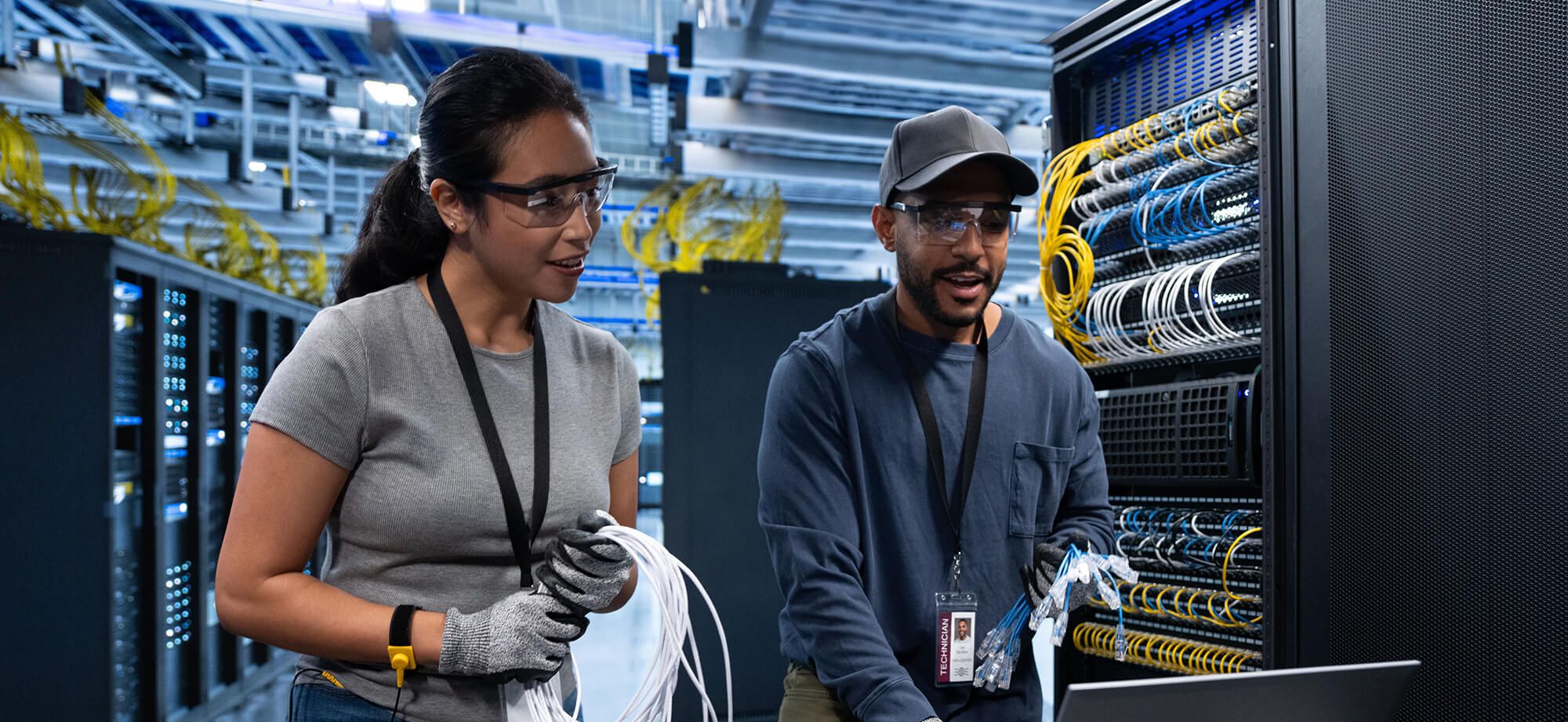
Build the physical connections that keep workplaces, devices, and data centers online. In 5.5 weeks of no-cost, hands-on training, learn to install and test cabling, handle fiber safely, and connect and troubleshoot networks for entry-level technician roles. Prepare to earn OSHA 10-Hour and NFPA 70E certifications at no cost to you. These help show employers your electrical and jobsite safety knowledge.
Time Commitment: Full-Time, 35 hours/week
Course Level
Foundational
Length
5.5 weeks
Exact dates vary by class
Certifications
- IT Service Management (ITSM) Fundamentals
- NFPA 70E Electrical Safety
- OSHA-10 General Industry
Requirements
No previous experience is required. You must:
- Be comfortable with hands-on physical work, including occasionally lifting up to 50 lbs, standing or bending for extended periods, and using common power tools.
- Be able to distinguish color-coded cabling and components, with or without corrective lenses.
- Meet Per Scholas minimum eligibility requirements.
- Complete 6 hours of free online Tech Prep Work before class begins.
Get Class Details by Location
Structured Cabling & Fiber Technician is offered in one location (Dallas).
Course Format
Instruction
Instructor-led
Dates, hours and length vary by class — see below
Upcoming classes1 at Dallas
| Starts | Apply by | Ends | Meets | Format | Version code |
|---|---|---|---|---|---|
| Dec 7, 2026 | Nov 23, 2026 | Jan 28, 2027 | Monday - Friday9:00 AM – 4:00 PM CT | Hybrid | 2107.1 |
What is a Structured Cabling & Fiber Technician?
The internet, Wi-Fi, and connected devices people rely on every day depend on cabling installed throughout buildings and data centers. Low Voltage Technicians help build this physical infrastructure by routing, connecting, labeling, testing, and troubleshooting the cabling that connects networks and devices.
Build Foundational Cabling Skills: Learn to route, connect, label, test, and troubleshoot network cabling through live instruction and hands-on labs.
Train with Real Tools: Practice using hand and power tools, patch panels, cable testers, conduit, and other equipment used in entry-level installation work.
Supercharge Your Job Search: Work directly with dedicated career coaches to build your resume, practice interviewing, and learn to confidently present your new skills to employers.
Is This Right For You?
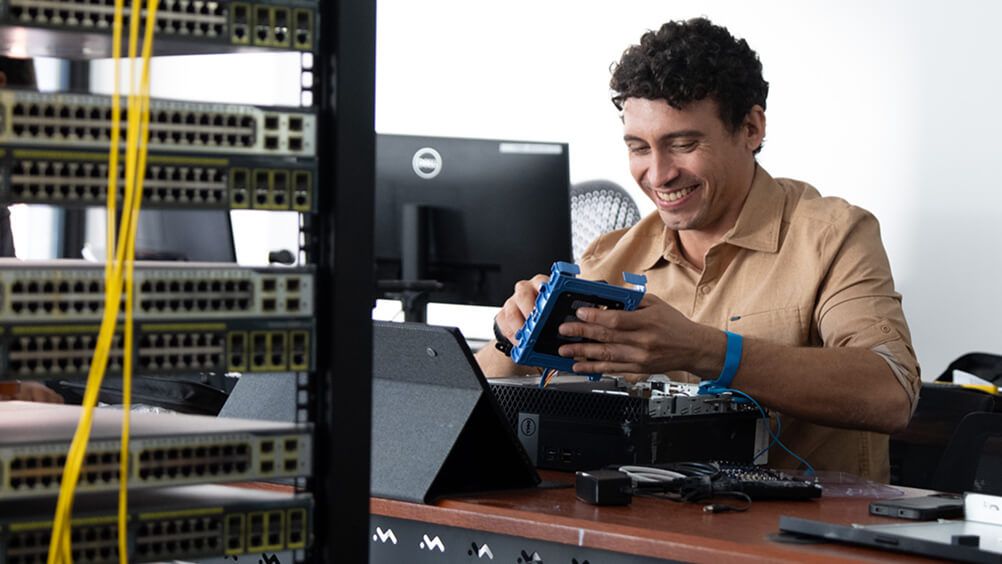
You may be successful in this training if you want to start a hands-on career in infrasatructure tech and:
- Enjoy building, fixing, installing, or figuring out how things work.
- Pay attention to details and follow instructions carefully.
- Are comfortable standing, lifting up to 50 lbs, and using tools.
- Prefer hands-on work to spending most of the day at a desk.
- Can commit 35 hours weekly to instruction, labs, and career prep during an accelerated 5.5-week program.
What You'll Learn
By the end of the training, you'll be able to:
- Install and organize the cabling that keeps networks connected, including copper and coaxial cabling.
- Run cabling safely through buildings using common hand and power tools, pathways, and conduit.
- Build and test network connections using wall jacks, patch panels, cable testers, and other common equipment.
- Work safely with basic fiber optic cabling, including handling, routing, inspecting, and cleaning fiber.
- Find and fix common connection problems and connect cabling to equipment like network switches and wireless access points.
How You'll Learn
Build confidence by practicing the same types of installation tasks you'll encounter on the job.
- Hands-On Training: You'll use tools to measure and plan cable routes, mount equipment, bend conduit, install cabling, build patch panels, terminate connections, and test your work.
- Cabling and Troubleshooting Practice: You'll work with copper, coaxial, and basic fiber optic cabling while learning how to identify common installation problems and confirm that connections are working correctly.
- Job-Site Safety Certification: Prepare for OSHA 10-Hour General Industry and NFPA 70E certifications, building foundational workplace and electrical safety knowledge.
Career Opportunities After Training
After completing the program, you'll be prepared to pursue entry-level positions such as:
- Low Voltage Technician
- Structured Cabling Technician
- Telecommunications Installation Technician
- Data Center Cabling Technician
- Field Installation Technician
In these roles, you'll help install the physical cabling that keeps buildings connected by routing cable, making connections, testing completed work, troubleshooting problems, and documenting installations.
Your Career Can Grow From Here
Many professionals begin in entry-level cabling and installation roles before taking on more advanced responsibilities. As you build field experience and continue developing your skills, you may have opportunities to specialize further in structured cabling, fiber optics, network infrastructure, or other low-voltage systems.
What to Expect
- Most entry-level roles are on-site because the work involves physically installing, connecting, and testing cabling.
- Day-to-day work may include using tools, pulling cable, building connections, labeling equipment, testing installations, and following work orders.
- Your first role is the beginning of your low-voltage career—not the destination.
Structured Cabling & Fiber Technician
- View Admissions Process
Before You Apply
Review eligibility requirements and understand each step of the admissions process so you know exactly what to expect before submitting your application.
- Explore Learner Resources
Learner Resources
Your success extends beyond the classroom. From career coaching to learner support and financial resources, we're here to help you succeed from your first day of training through your job search.