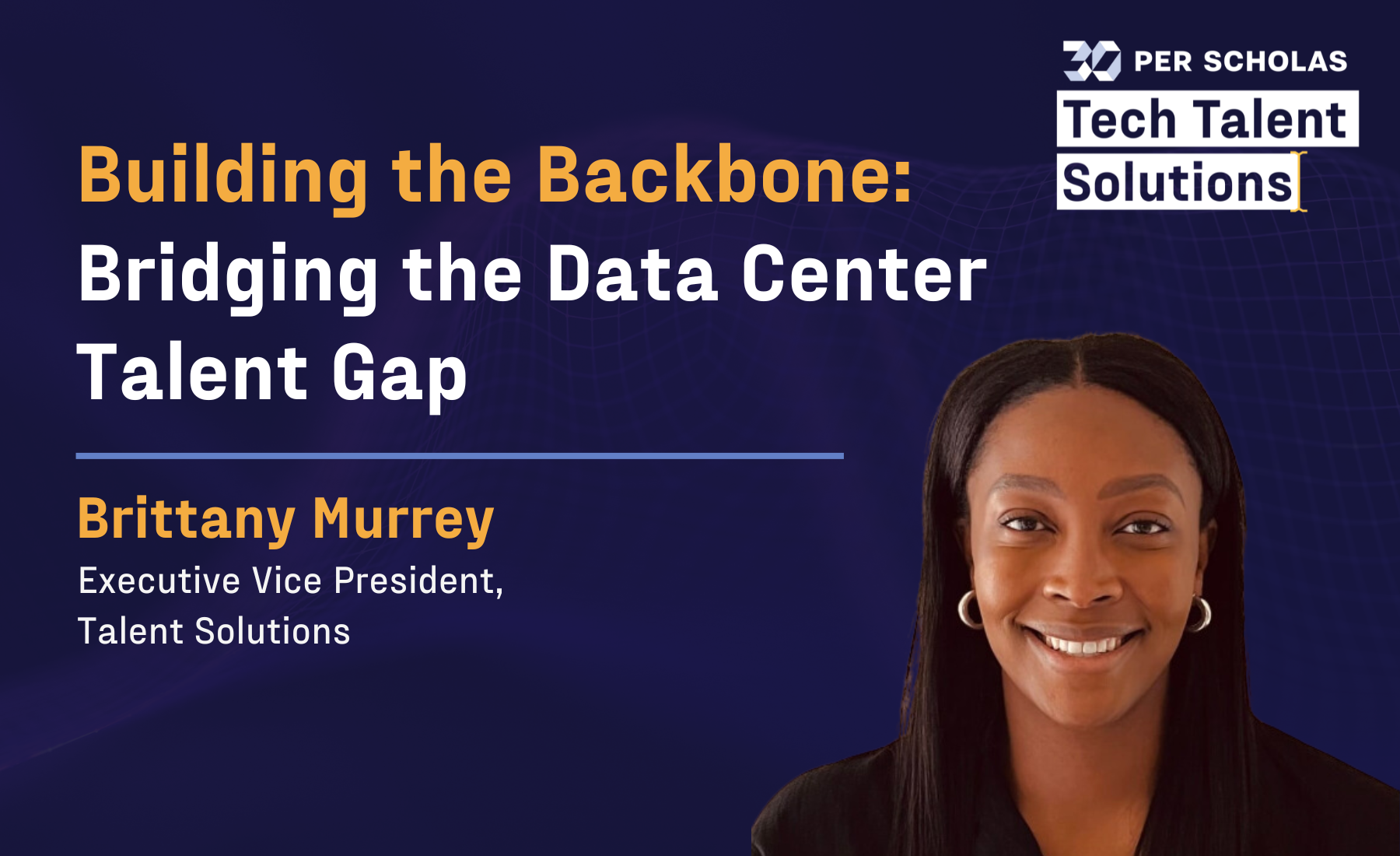
Moderating Data Centers in Demand: Workforce Trends & Talent Pipelines was not only a privilege, but a call to action and crucial moment to align our industry's vision with its most pressing challenge: cultivating a workforce ready to support the exponential growth of global tech infrastructure.
As Riley Mahler of TEKsystems emphasized during the discussion, the scale of investment in data centers, over $1 trillion from just 12 companies, is unprecedented. And yet, it's clear that we are underprepared from a workforce perspective as our current talent pipeline isn't keeping up. With over 300,000 roles currently unfilled and a projected need for 2.3 million data center jobs spanning technicians, logistics, construction, engineering, and critical systems support, the talent gap is not only real, it's widening. As demand explodes, it's important that we have the workforce to support it.
The current challenge requires urgent action to build the systems, partnerships and pipelines that will create a reliable workforce. It's time to be intentional about the work ahead.
Key Takeaways from the Panel
- The Scale of Growth is Staggering – and GlobalData centers now consume more megawattage than entire cities, and that footprint is growing by 50% annually. This infrastructure buildout spans North America, EMEA, and Asia, representing a truly global demand for skilled talent.
- Data centers now consume more megawattage than entire cities, and that footprint is growing by 50% annually. This infrastructure buildout spans North America, EMEA, and Asia, representing a truly global demand for skilled talent.
- We Are Nowhere Near Talent SufficiencyDespite rising opportunities, we face a 300,000-worker deficit in the U.S. data center sector alone. The workforce is not keeping pace with buildout, and the pressure is mounting.
- Despite rising opportunities, we face a 300,000-worker deficit in the U.S. data center sector alone. The workforce is not keeping pace with buildout, and the pressure is mounting.
- Critical Skill Sets Are Emerging FastEmployers report acute demand in four primary areas: Data Center TechniciansLogistics and Operational CoordinationCritical Infrastructure & Environmental ControlsProject and IT Management Beyond those roles, construction managers, utility engineers, HVAC techs, and liquid cooling experts are essential to making these modern marvels run.
- Employers report acute demand in four primary areas: Data Center TechniciansLogistics and Operational CoordinationCritical Infrastructure & Environmental ControlsProject and IT Management
- Data Center Technicians
- Logistics and Operational Coordination
- Critical Infrastructure & Environmental Controls
- Project and IT Management
- Beyond those roles, construction managers, utility engineers, HVAC techs, and liquid cooling experts are essential to making these modern marvels run.
- Inclusive Training is the UnlockAs Craig Curry, a Per Scholas graduate now at Microsoft, illustrated: people from nontraditional, non-technical backgrounds can not only enter this field, they can thrive. With the right training and access, we can unlock untapped talent pools to meet the demand.
- As Craig Curry, a Per Scholas graduate now at Microsoft, illustrated: people from nontraditional, non-technical backgrounds can not only enter this field, they can thrive. With the right training and access, we can unlock untapped talent pools to meet the demand.

How Companies Can Prepare
To address today's talent crisis, and prepare for tomorrow, employers must rethink how they build, attract, and retain talent:
- Invest in Workforce PartnershipsCollaborate with training providers like Per Scholas to design tailored, hands-on programs aligned with your talent needs. Programs that are co-designed with employers are more agile and scalable.
- Collaborate with training providers like Per Scholas to design tailored, hands-on programs aligned with your talent needs. Programs that are co-designed with employers are more agile and scalable.
- Widen the Talent ApertureRelying on traditional four-year degree pipelines won't meet demand. Instead, prioritize skills-based hiring and provide on-ramps for individuals from underrepresented communities, veterans, and career changers.
- Relying on traditional four-year degree pipelines won't meet demand. Instead, prioritize skills-based hiring and provide on-ramps for individuals from underrepresented communities, veterans, and career changers.
- Support Upskilling and Internal MobilityRetaining talent is just as critical as sourcing it. Create pathways for growth inside your organization by reskilling your current workforce and offering clear trajectories into high-demand roles like data center technicians and project managers.
- Retaining talent is just as critical as sourcing it. Create pathways for growth inside your organization by reskilling your current workforce and offering clear trajectories into high-demand roles like data center technicians and project managers.
- Plan for the Future NowThe data center infrastructure is expected to expand by 50% annually. If your talent strategy doesn't scale with that growth, your infrastructure, and business, will be at risk.
- The data center infrastructure is expected to expand by 50% annually. If your talent strategy doesn't scale with that growth, your infrastructure, and business, will be at risk.

At Per Scholas, we are all-in on creating real, scalable pathways and building equitable solutions to close the talent gap in data centers and beyond. We are proud to stand alongside partners like Microsoft and TEKsystems, who understand that shaping the future of tech infrastructure means investing in people.
Let's build a more future-ready workforce, together.